Explore classroom-ready lesson plans and teaching materials that help students understand America’s founding principles, constitutional government, and civic responsibilities.
Why America?
Know America. Love America.
Celebrating America’s 250th Anniversary
Why America is an initiative designed to help students, educators, and communities explore the ideas, institutions, and civic responsibilities that define American democracy.
“Understanding why America was founded — and how its principles work — is essential to sustaining a free society.”
Educating for America 250
“You cannot love what you do not know” – Historian David McCullough
Today, only 24 percent of graduating seniors demonstrate proficiency in civics, a troubling indicator of how little many students understand about our nation’s history and institutions.
At the same time, educators, organizations, and policymakers across the country are working to strengthen civic understanding and engagement. From thoughtfully designed curriculum and classical texts to adaptive platforms, interactive tools, and video content, today’s civics landscape offers more opportunity than ever to move students beyond slogans and toward substance.
To support this effort, Why America has curated a growing directory of civics education tools, lesson plans, assessments, and emerging programs that strengthen understanding of American history, constitutional government, and the habits of responsible citizenship.
Access Why America? Resources
As America approaches the 250th anniversary of its founding in 2026, educators and families are seeking high-quality tools to help students better understand the nation’s history, institutions, and civic responsibilities.
The Why America Initiative brings together a curated collection of lesson plans, recordings, databases, and educational programs designed to strengthen civic knowledge and deepen engagement with the principles that shaped the United States.
Explore the resources below to begin.
Jeanne began her career in education and policy on Capitol Hill before serving from 1983 to 1987 as a senior official at the U.S. Department of Education under President Ronald Reagan. She went on to establish the first education policy office at The Heritage Foundation, helping shape the national conversation on education reform. Throughout her career, she has advised and collaborated with education entrepreneurs and Silicon Valley innovators, championing the use of technology to expand access, personalize learning, and scale high-quality educational opportunities. These early experiences laid the foundation for her leadership at the Center for Education Reform and the Yass Prize, where she continues to drive bold, innovative change on behalf of students and families nationwide.
She holds a bachelor’s degree from Dickinson College and a master’s degree in Education Entrepreneurship from the University of Pennsylvania, where she helped develop the program. She has also served in advisory roles with the StartED Accelerator and the ASU+GSV Summit, and currently sits on the advisory board of the University of Austin’s Center for Education and Public Service.
Jeanne is married to Dr. Kevin Strother, a classically trained musician, teacher, and charter boat captain. Together, they enjoy time with their family—where education is always at the center of the conversation.
PROGRAM RECORDINGS
Watch lectures, discussions, and educational programs featuring historians, scholars, and educators exploring the ideas that shaped the United States.
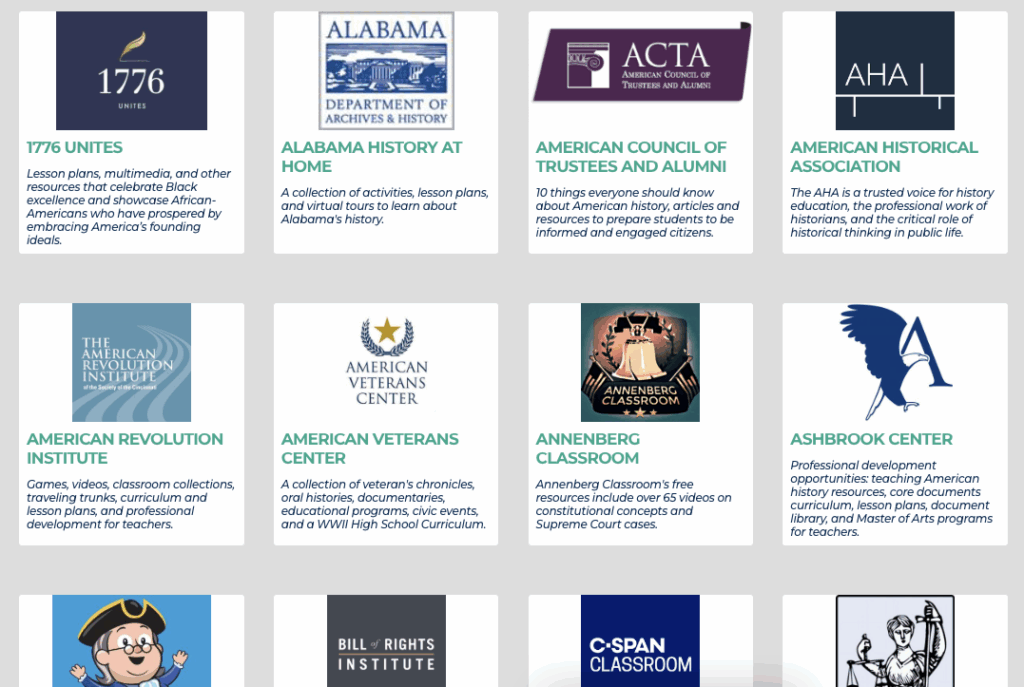
CIVICS RESOURCE DATABASE
Browse a curated directory of organizations, curricula, and digital tools advancing the study of American history, government, and responsible citizenship.
Civics Education Resource Directory
Across the country, organizations are developing curriculum, tools, and programs to strengthen understanding of American history, constitutional government, and civic responsibility.
The directory below highlights leading resources educators, families, and students can explore to deepen civic knowledge and engagement.
Check back often as we will continue to expand this list as additional resources and initiatives emerge in preparation for the nation’s 250th anniversary in 2026.
Jeanne began her career in education and policy on Capitol Hill before serving from 1983 to 1987 as a senior official at the U.S. Department of Education under President Ronald Reagan. She went on to establish the first education policy office at The Heritage Foundation, helping shape the national conversation on education reform. Throughout her career, she has advised and collaborated with education entrepreneurs and Silicon Valley innovators, championing the use of technology to expand access, personalize learning, and scale high-quality educational opportunities. These early experiences laid the foundation for her leadership at the Center for Education Reform and the Yass Prize, where she continues to drive bold, innovative change on behalf of students and families nationwide.
She holds a bachelor’s degree from Dickinson College and a master’s degree in Education Entrepreneurship from the University of Pennsylvania, where she helped develop the program. She has also served in advisory roles with the StartED Accelerator and the ASU+GSV Summit, and currently sits on the advisory board of the University of Austin’s Center for Education and Public Service.
Jeanne is married to Dr. Kevin Strother, a classically trained musician, teacher, and charter boat captain. Together, they enjoy time with their family—where education is always at the center of the conversation.
The America 250 Civics Education Coalition
Inspiring Americans to know history and civic responsibilities.
Presidential 1776 Study Library
Federally supported collection promoting study of America’s founding documents.
National Constitution Center & Khan Academy
Free, nonpartisan constitutional courses and civic resources online.
PragerU
Nonprofit producing civics, history, and economics educational resources.
Bill of Rights Institute
Curriculum and resources on America’s founding principles.
Constituting America
Educating students and citizens about the U.S. Constitution.
iCivics Primary Source Sets
Curated primary documents supporting inquiry-based civic learning.
Hillsdale K-12
Classical, content-rich K–12 curricula in history and civics.
America 250
Nationwide initiative commemorating America’s 250th anniversary.
Freedom 250
Celebrating and teaching liberty and self-government principles.
Special Semiquincentennial Contests & Activities
American Heroes Student Art Contest
Presidential 1776 Award Contest
Constitution Day Classroom Activities
Charter schools, as public schools, should receive the same level of per-pupil funding as traditional public schools, without unwarranted deductions for administrative costs. Furthermore, they need control over their own finances to manage resources effectively and implement their educational vision.