2025 PISA and PDK Results
Two indicators of the state of American schools have been released this week – Programme for International Student Assessment (PISA) test results from the Organisation for Economic Cooperation and Development (OECD) and PDK’s annual poll of the public’s opinion of the education system.
One an international spotlight, the other inwardly focused.
OECD’s triennial PISA measures student proficiency of 15-year-olds in Science, Reading, and Math in 91 countries. Compared to 2022, this year’s results for the United States show an increase of 3 points in Science (still back to even with 2009), a decrease of 14 points in Reading, and a decrease of 2 points in Math (still 24 points down from 2009!).
So, roughly one in four American 15-year-olds is not demonstrating basic reading skills, and more than one in three is not demonstrating basic math skills. These skills could be as essential as understanding a monthly utility bill.
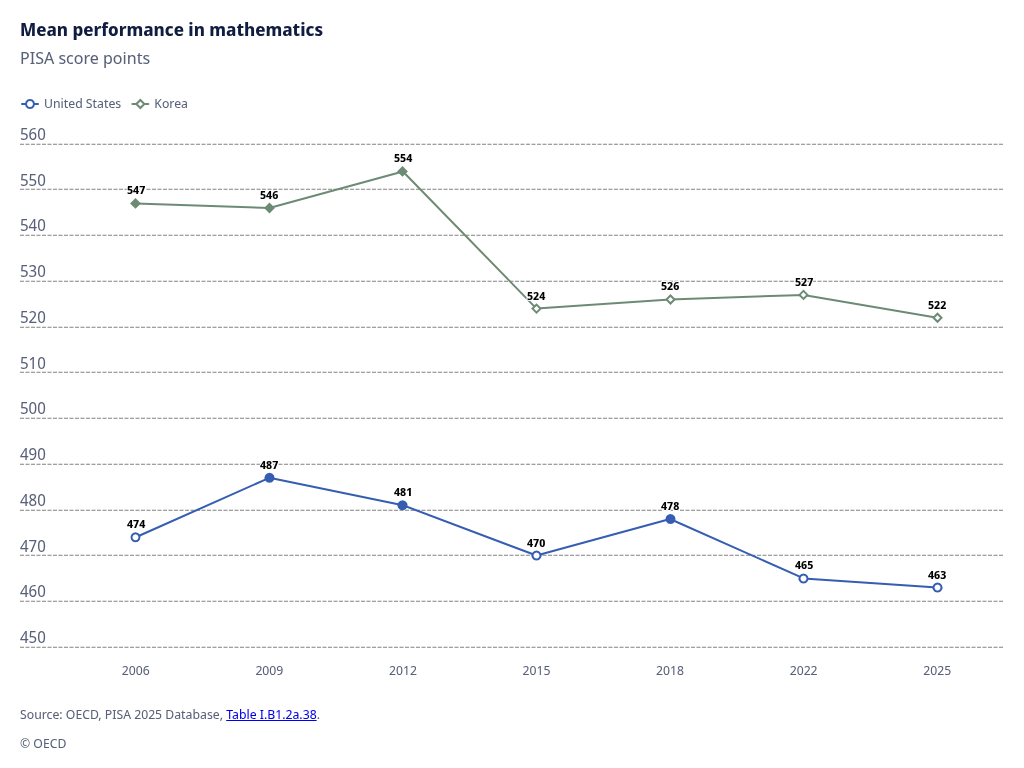
Takeaway: These results demonstrate the continued erosion of basic skills and the failure of too many U.S. schools to convey and build the knowledge and reading stamina students need for life.
PDK’s annual poll has often hit a positive note for public schools, but in 2025, the number of Americans who would give high marks first to their local public schools and then to the nation at large is under water: 43 percent locally, 13 percent nationally! The lowest positivity rating since 2004.
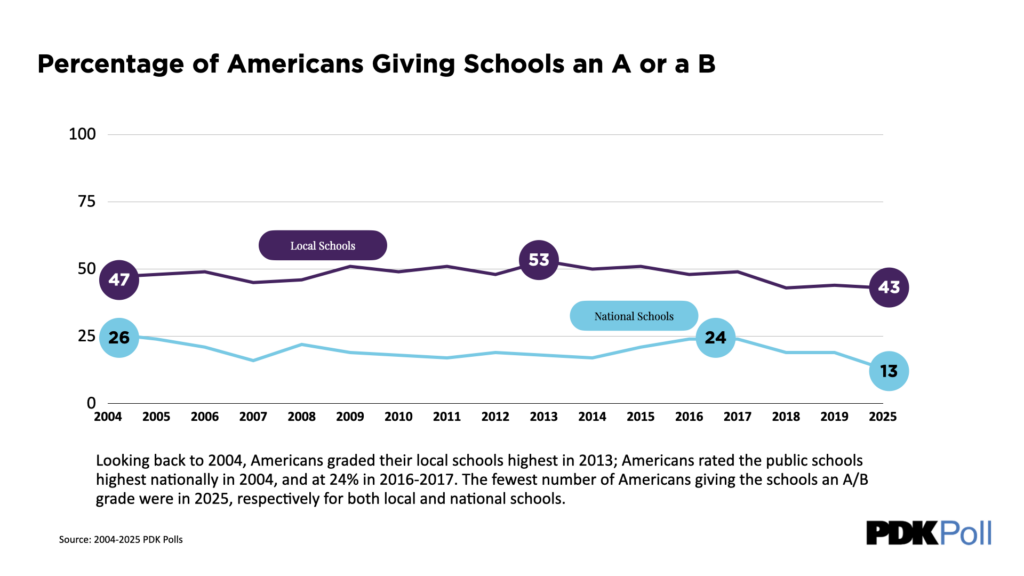
What’s more, 59% of parents in this year’s poll supported “using public funding so that their child could attend a private or religious school”.
Takeaway: Together, the two findings tell a compelling story: the erosion of basic skills is being matched by an erosion of public confidence, which in turn is driving the need – and parent demand – for alternatives and will continue to drive enrollment shifts to better and more responsive schools as more families vote with their feet.