Policy Memo
The Latest From CER
New Recommendations, Policy Blueprints, Coalition Initiatives, and Analysis from CER and its Partners.
Jeanne began her career in education and policy on Capitol Hill before serving from 1983 to 1987 as a senior official at the U.S. Department of Education under President Ronald Reagan. She went on to establish the first education policy office at The Heritage Foundation, helping shape the national conversation on education reform. Throughout her career, she has advised and collaborated with education entrepreneurs and Silicon Valley innovators, championing the use of technology to expand access, personalize learning, and scale high-quality educational opportunities. These early experiences laid the foundation for her leadership at the Center for Education Reform and the Yass Prize, where she continues to drive bold, innovative change on behalf of students and families nationwide.
She holds a bachelor’s degree from Dickinson College and a master’s degree in Education Entrepreneurship from the University of Pennsylvania, where she helped develop the program. She has also served in advisory roles with the StartED Accelerator and the ASU+GSV Summit, and currently sits on the advisory board of the University of Austin’s Center for Education and Public Service.
Jeanne is married to Dr. Kevin Strother, a classically trained musician, teacher, and charter boat captain. Together, they enjoy time with their family—where education is always at the center of the conversation.
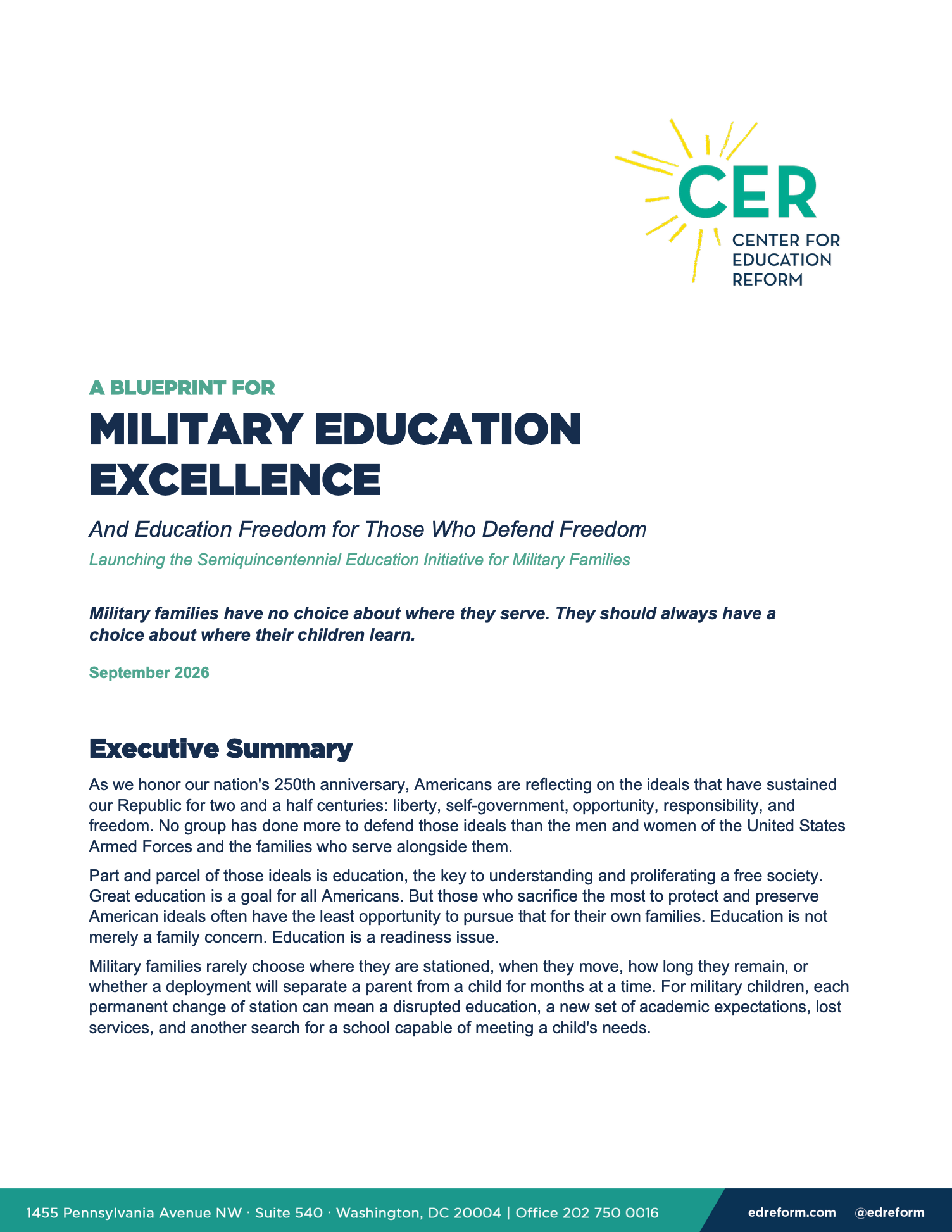
A Blueprint for Military Education Excellence, September 2026
Military families have no choice about where they serve. They should have meaningful choices about where and how their children learn. CER’s blueprint presents an action agenda for educational freedom, continuity, and innovation for military-connected students. This memo was delivered to Congress and administration for review and action on September 15, 2026.
Federal Action: From Washington
Follow consequential actions by the White House, Congress, and federal agencies—and understand what they mean for states, schools, educators, and families.
Federal Education Tax Credits (ECCA): What Families Need to Know Right Now
02.03.2026
The Educational Choice for Children Act (ECCA) establishes a federal tax-credit scholarship to expand K–12 education options for families – but only in states that choose to participate and implement…
U.S. Department of Education Grants First ESEA Waiver to Iowa
01.05.2026
The U.S. Department of Education approved Iowa as the first state to receive a Returning Education to the States Waiver, allowing the state to consolidate select federal funds and reduce…
White House Announces U.S. Department of Education Reorganization
11.18.2025
The White House’s November 18th restructuring shifts key federal education programs to other agencies, creating major opportunities – but also an urgent need – for states to get clear guidance,…
Analysis & Commentary
Commentary and perspective from CER’s leadership and network on the changing federal education landscape.